Skip to content

I owe you

29 Aug 2010
by Christine Lefebvre

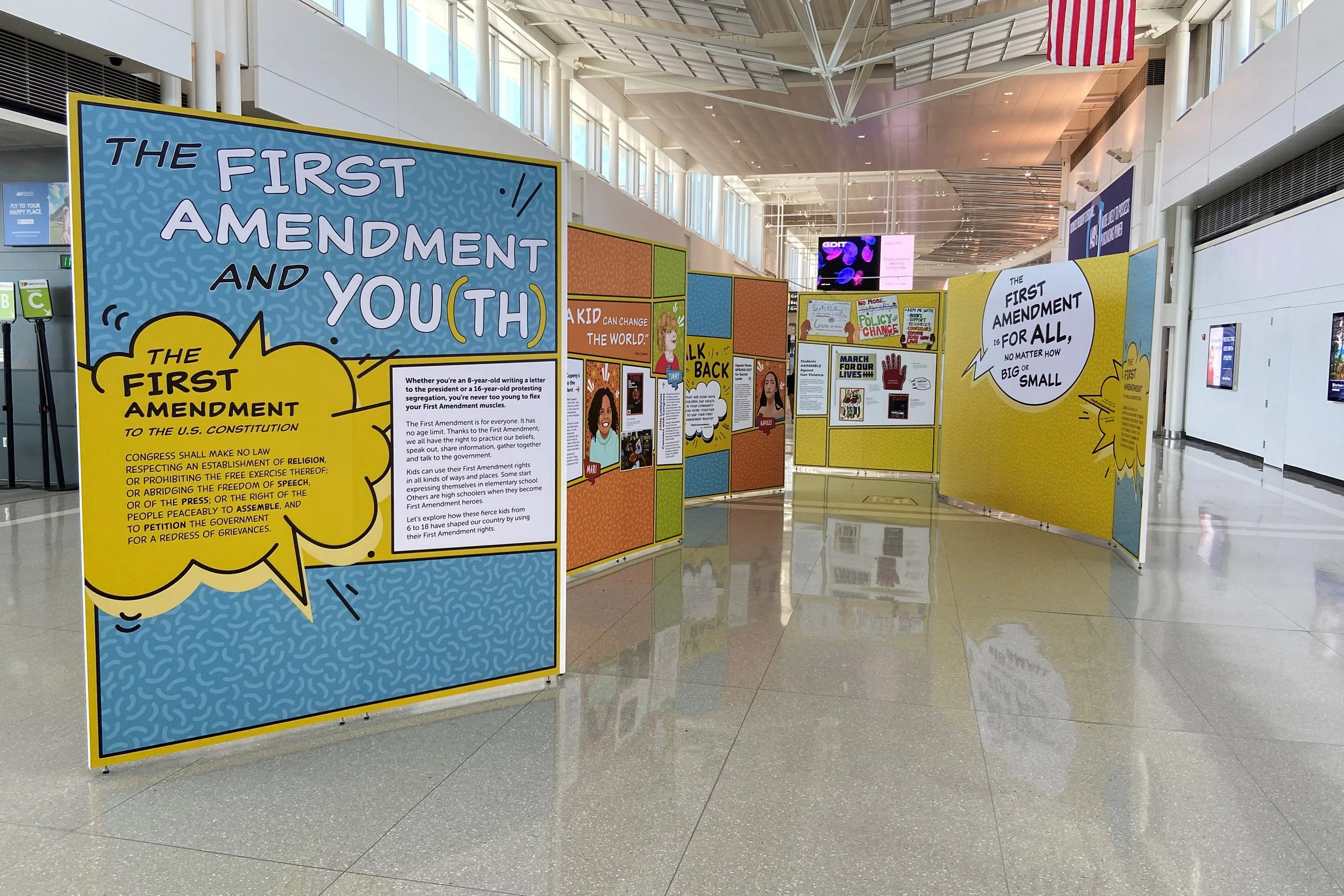
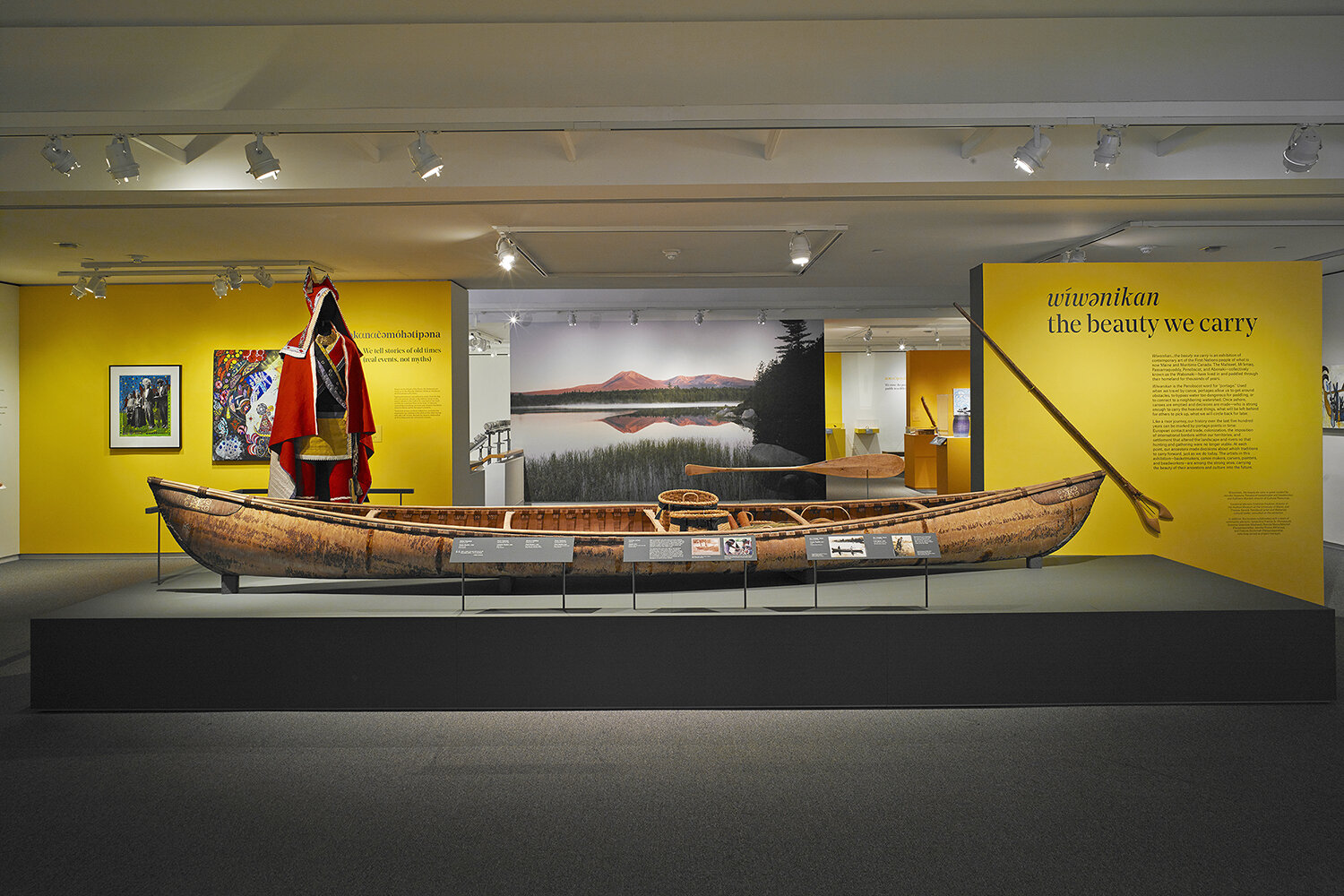
The Exhibit Designer’s been quiet the past couple of weeks, despite a somewhat hefty backlog of content. Some of it is above…. Some of it dates to when we were wearing knit hats and snow boots.

I’ll have it all up asap.

The radio silence is mostly due to a trip out West last week, with my colleagues from Christopher Chadbourne & Associates, for the opening of the Old Faithful Visitor Education Center in Yellowstone National Park. Terribly exciting. Stay tuned….

///

Museum as hub

15 Aug 2010
by Christine Lefebvre

New Museum
New York, NY

///

Whales (Part II)

12 Aug 2010
by Christine Lefebvre

Whales | Tohorā is at the Museum of Science, Boston. It’s about whales.

Just like at the Bar Harbor Whale Museum [Whales (Part I)], you will learn the most fascinating facts about whales; facts like: the first whales walked on land! and: Baleen whales have two blowholes! Toothed whales have only one!

Unlike at the Bar Harbor Whale Museum, Whales | Tohorā is a slick exhibit developed by the Museum of New Zealand Te Papa Tongarewa. Really, it’s all about budget.

The black, reflective platforms, slightly angled, below the whale skeletons are a dramatic centerpiece to the exhibit. I found myself returning to this display numerous times to again look at the skeletons. The same technique was used for some of the smaller skeletons too—like that of the walking whale (below, right). Also below: rear lit reader rails. It’s a fine line with rear lit graphics. Too bright and they look tacky. A soft glow is easier on the eyes.

The skeletal structure of this timeline/artifact case wall reminded me ever-so-slightly of the Design for a Living World exhibit at the Cooper Hewitt.

The whale skulls cases are beautiful. Everything looks substantial and high quality. I like this straightforward presentation style when showing multiples. Keep the design minimal and the text to a minimum. (Words to live by.)

Through September 14.

///

Whales (Part I)

08 Aug 2010
by Christine Lefebvre

Bar Harbor Whale Museum, Maine

///

Welcome to Fort Warren

05 Aug 2010
by Christine Lefebvre

This past weekend I hopped on a Boston Harbor Islands ferry, and landed on Georges Island. I was surprised to find how developed it has become since the last time I went, a couple of summers ago. Home to the Civil War-era Fort Warren, the island now offers a slew of amenities including new visitor center, clean bathrooms (!!!), and—somewhat to my alarm—a Summer Shack*.

The exhibit within the visitor center was a nice surprise though I was only able to spend the briefest amount of time looking around. It offered a media piece, and such low-tech treats as huge musket balls, a wall of boxes that could be opened to reveal artifact cases and further stories (ah, the simple pleasure of opening a door…), other artifact cases incorporated into trunks, and a table set for six (each plate was a meal that people of different rank, from officers to prisoners, would have eaten while at the fort).

*Pack a picnic!

///

Escher’s optical phenomena (mirror, mirror)

01 Aug 2010
by Christine Lefebvre

Inside the Mind of M.C. Escher at the Museum of Science, Boston
through September 6

///

American High Style by way of Brooklyn

27 Jul 2010
by Christine Lefebvre

Mannequins were as models on a runway, posed dramatically or playfully, frozen under spotlights in otherwise dimly lit exhibit rooms. Stylized design details like gold dimensional letters for titling and the mannequins’ sculpted hairstyles added just a touch of flair to the restrained presentation. In Brooklyn, the clothing was the focus.

American High Style: Fashioning a National Collection, at the Brooklyn Museum, is presented in honor of the transferred stewardship of the museum’s costume collection to the Costume Institute at the Metropolitan Museum, and as a complement to the Met’s exhibit, American Woman: Fashioning a National Identity.

The Met’s presentation is decidedly more theatrical, with its painted backdrops, props, wigs, and themed galleries. I haven’t yet seen it in person but I have seen photos, and I plan (to try) to catch it before it closes on August 15. Because that’s the thing to do: see both and compare them.

But back to the Brooklyn Museum. Do see American High Style, I highly recommend it. And hurry—the exhibit closes on August 1.

The layout of the exhibit was straightforward, and it was apparent that a lot of thought was put into its organization. Approximately eighty-five mannequins were arranged into six groupings: the House of Worth, French Couture 1900–1940 and 1946–1970, the designers Elsa Schiaparelli, and Charles James, American women designers, and American men designers. Additionally, there were accessories and design sketches, a wall of rare dolls dressed in the finest French fashions from 1715–1906, and a room filled with shoe prototypes and drawings by Steven Arpad (a highlight).

With all this to see, the exhibit was still succinct in its offering, and the accompanying text was interesting to read.

The mannequins stood on plywood ‘runways’ with the labels printed directly onto the plywood, translucent white screen as first layer. (I’m guessing there, as I can’t tell for certain from my photographs and my memory fails me. Second guess: applied film. Anyone?) I liked the un-embellished, though still polished, plywood but not the trough-like detail at the front of the ‘runways.’ It would have been cleaner if instead of its V shape, the runway were still angled at the front, but then went straight down, perpendicular to the floor. This was my only (minor) critique of an overall truly enjoyable exhibit.

Click here for more photos. >>>

Elvis in the News(eum)

11 Jul 2010
by Christine Lefebvre

Newseum, Washington, D.C.
“Elvis!
His Groundbreaking, Hip-Shaking, Newsmaking Story”
Temporary exhibit, on view through February 14.

///

Too many mummies

28 Jun 2010
by Christine Lefebvre

There’s the heavily-advertised King Tut in New York, and another King Tut, in Denver; Cleopatra in Philadelphia (NY Times review, here), The Mummy Chamber in Brooklyn,* and Mummies of the World in L.A.—not to mention those other Egyptian-themed exhibits which I am certainly forgetting—and how cool would this underwater museum be??

And then we have—hadThe Secrets of Tomb 10A at the Museum of Fine Arts Boston. I’ve taken so long to post about this exhibition that it seems to have closed. Yesterday. Sorry.

Truly sorry. I liked the exhibit very much. You should have seen for yourself that it was a perfect balance of anthropology and art, both, fascinating and beautiful.

The story of Tomb 10A goes something like this: It was the tomb of the high officials Djehutynakhts (pronounced “je-hooty-knocked”), discovered in 1920 by a group of Harvard University-Boston Museum of Fine Arts archeologists. Inside was the largest funerary assemblage of a Middle Kingdom (2040–1640 BC) official ever found intact (despite the tomb’s having been robbed in antiquity): four coffins, walking sticks, pottery, canopic jars, wooden models of daily life, and—ew—a disembodied head. Egypt gave the entire collection to the MFA and sent it along to Boston. It met with some minor setbacks en route—not least, the collection’s catching fire—but arrive it did, only to be mostly tucked away in storage for ninety years. It was for the first time that the entire lot was on display.

Walking into the exhibit, you first saw a statue, representative of Egypt during the Middle Kingdom, stood in front of large, richly beautiful photographs of the area around the tomb. This first room set the stage: information about Egypt during Djehutynakht’s time, introductions to the “cast of characters,” and a description of how the exhibit was organized.

It told you that in the next room you’d see objects from the actual tomb, in the third room you’d see what was missing from the tomb, and in the final room you’d learn about the archeological investigations still underway on the site. I appreciated this road map of what was to come in the relatively large exhibit. It helped to keep clear in my mind where I was within its organization.

But, a question for you non-museum-design/development-types: is information like this important to you? Do you find it helpful or even notice it?

The second room, below, was by far my favorite part of the exhibit. The wooden models were all gorgeous, and I love the simplicity of the wall of boats. The artifact displays throughout were sparse and reverential, arranged simply and tastefully. Absolutely lovely.

The color palette was nice as well. (Speaking of colors, have you ever wondered about Egyptian color symbolism? Of course you have.)

* I’ve seen The Mummy Chamber too. While Tomb 10A was dark and atmospheric, Mummy Chamber is bright, bright, bright—especially on a sunny summer afternoon. It too had some nicely currated artifact cases, though I prefer the moodiness and intimacy of the MFA show. But what does the Mummy Chamber have going for it, most important of all, that Tomb 10A doesn’t? Long-term open-ness.

///

Lists: not done

27 Jun 2010
by Christine Lefebvre

Smithsonian’s Reynolds Center, Washington, D.C.

Just my stinkin’ luck. I arrived when the exhibition Lists: To-dos, Illustrated Inventories, Collected Thoughts, and Other Artists’ Enumerations was closed to transition from Part One to Two, when all the cases were empty and the only thing to read, teasingly, was the silkscreen on the wall.

It would have been great to see these lists in person but alas. Unless another trip to D.C. happens before September 27, I’ll have to make due with the exhibition book.

///